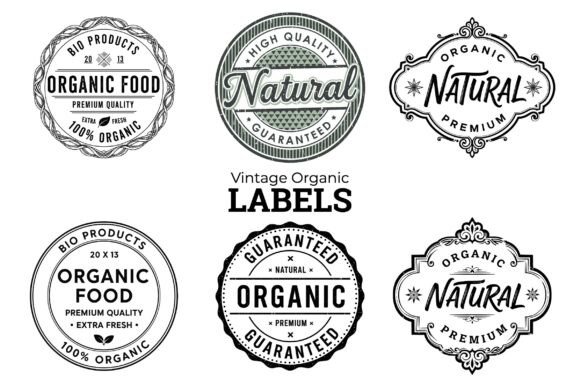
Vintage Organic Labels Badges SVG
First Impressions: Warm, Handmade, and Quietly Confident
Opening the Vintage Organic Labels Badges SVG collection felt like unrolling a linen tea towel from a small-batch apothecary—soft edges, gentle curves, and a quiet sense of intention. These aren’t loud logos or sharp-edged graphics; they’re six distinct labels designed to whisper “thoughtfully made” rather than shout “look at me.” Each one balances vintage typography with organic flourishes—think hand-drawn botanical accents, subtle asymmetry, and generous negative space. As an embroidery designer who’s stitched hundreds of client projects, I immediately sensed this set belongs on items where authenticity matters more than flash: a cotton apron for a neighborhood bakery, a linen pillow cover for a slow-living boutique, or a baby onesie for a mindful parenting brand.
A Real Project Test: Embroidering a Linen Tote Bag for a Local Herb Shop
Last week, I used one of the Vintage Organic Labels Badges SVG designs—a circular label with “Dried & True” in looping script and tiny lavender sprigs—to embroider a heavyweight natural linen tote. The result? Clean, legible, and deeply cohesive with the product’s ethos. The design’s moderate detail level translated beautifully in satin stitch for the lettering and soft fill stitch for the botanical elements. No thread nesting, no puckering—just crisp definition that held up even on the fabric’s slightly nubby texture. Customers paused mid-shop to run their fingers over the stitching. That tactile response is gold for handmade products—and it’s why this collection works so well for small shop owners and Etsy sellers building trust through craft integrity.
Where It Shines (and Where to Pause)
The Vintage Organic Labels Badges SVG thrives in contexts where warmth and authenticity drive purchase decisions:
- Custom apparel: Sweatshirts, relaxed-fit tees, and canvas jackets—especially when placed on chest or sleeve for understated branding.
- Baby embroidery: On organic cotton onesies or muslin swaddles, the soft shapes and open layout avoid overwhelming delicate scale.
- Embroidered patch applications: These translate cleanly to sew-on or iron-on patches for denim jackets, backpacks, or market aprons.
- Holiday embroidery and personalized gifts: A “Gather & Give” label on a hand-stitched kitchen towel feels intentional—not seasonal, but soulful.
- Commercial embroidery for boutiques: Consistent tone across multiple SKUs (e.g., matching labels on tea towels, napkins, and sachets) builds quiet brand recognition without repetition fatigue.
That said, real-world use demands realism. Avoid placing any of these on:
- Highly textured fabrics like bouclé or thick terry cloth—fine details like vine tendrils may blur;
- Thin or stretchy knits without proper cutaway stabilizer—the open letterforms can distort;
- Curved surfaces like structured caps unless you reduce size and simplify thread paths;
- Dark fabric without testing thread contrast first—some script strokes are narrow and rely on light/dark interplay;
- Products meant for heavy laundering (like kids’ bibs) unless you confirm stitch density supports durability.
Design Assets That Earn Their Place in Your Workflow
As a reviewer who evaluates dozens of machine embroidery design sets yearly, I appreciate how thoughtfully these Vintage Organic Labels Badges SVG balance aesthetics and function. They’re not just graphics—they’re design assets with built-in versatility. You can easily adapt one as a standalone embroidered patch, layer it subtly behind a monogram, or use it in a printable mockup for your Etsy listing without needing heavy editing. The consistent stroke weight and generous spacing mean they scale down to 2.5" hoops without collapsing—and scale up to 4" for bold tote bag statements without feeling bloated.
What elevates them beyond decoration is how they support brand storytelling. A coffee roaster using “Small Batch • Roasted Daily” on ceramic mugs *and* embroidered canvas bags creates continuity. That kind of cohesion—across physical and digital touchpoints—is what makes customers feel they’re choosing values, not just products.
Practical Embroidery Designer Notes (From My Hoop to Yours)
Before stitching your first Vintage Organic Labels Badges SVG into a finished product, do these five things:
- Test on scrap fabric—especially if you’re using textured linen, organic cotton, or blends. Watch how the satin stitch wraps corners and whether fine stems hold definition.
- Check thread color contrast on both light and dark backgrounds. Some labels rely on tonal variation (e.g., oatmeal thread on ecru canvas), so preview digitally first.
- Review stitch density. These aren’t ultra-dense fills—ideal for breathable fabrics—but verify your machine handles the transitions between running stitch outlines and satin-stitched letters smoothly.
- Confirm hoop size compatibility. While most fit standard 4×4 hoops, two include wider flourishes best suited for 5×7. Don’t assume.
- Verify licensing before selling finished items or bundling the digital embroidery file with other craft business resources. This set is clearly positioned for commercial embroidery and handmade product use—but always double-check scope.
One final note: These labels don’t try to be everything. They won’t suit a tech startup’s pitch deck or a neon streetwear line. But for creative entrepreneurs building something rooted—in soil, in craft, in slowness—they offer rare clarity: a logos collection that feels handmade *before* it’s even stitched.