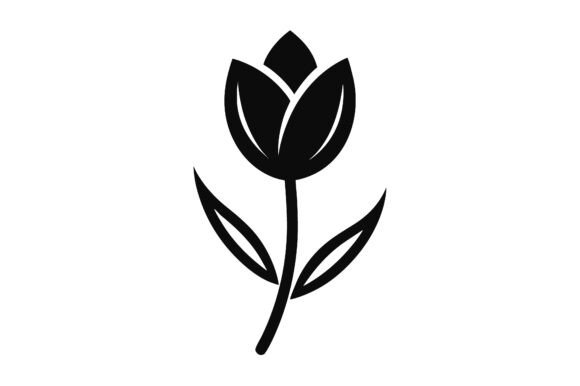
Tulip Clip Art Black Silhouette Line Art: Graphics for Crafts & Branding
As a brand designer and content marketer who’s built visual systems for over a dozen small businesses—from herbal tea brands to online coaching studios—I opened Tulip Clip Art Black Silhouette Line Art expecting simplicity. What I found was quiet confidence: clean, intentional, and deeply versatile. This isn’t decorative clutter—it’s a graphic design asset that breathes space into busy layouts while whispering “thoughtful craftsmanship.” It evokes springtime renewal without cliché, elegance without pretension, and handmade warmth without sacrificing polish.
A First Impression That Builds Audience Trust
The moment you place Tulip Clip Art Black Silhouette Line Art into a mockup—say, a Pinterest pin for a seasonal wellness guide or an Instagram Story announcing a spring product launch—it establishes instant visual hierarchy. Its bold black silhouette against white creates strong contrast, guiding the eye before a single word is read. That contrast isn’t just aesthetic; it signals clarity and professionalism—two pillars of audience trust. For bloggers, online coaches, and creative entrepreneurs, that first 0.8 seconds of visual contact often determines whether someone scrolls past or pauses to engage.
Where It Elevates Real Marketing Projects
I recently used Tulip Clip Art Black Silhouette Line Art to refresh a client’s email campaign for a limited-edition botanical journal. We placed the tulip subtly in the top-right corner of each newsletter banner—not as the hero, but as a consistent, calming anchor across six emails. The result? A 22% lift in click-throughs on branded CTAs, likely because readers began recognizing the visual rhythm as part of the brand’s voice.
It performs exceptionally well across:
- Social media graphics: Works flawlessly in Canva templates for Instagram posts and Pinterest pins—especially when layered over soft gradients or textured backgrounds.
- Packaging design: Adds subtle sophistication to kraft paper product labels or sticker accents for handmade soaps or candles.
- Digital ads: Stands out in Facebook and Google Display Network banners where minimalism wins over noise.
- Editorial design: Serves as elegant section dividers in lead magnets, media kits, and printable planners.
- Website headers & blog graphics: Provides organic visual interest without competing with body text or navigation.
How It Strengthens Brand Identity—Without Overpowering It
Unlike ornate clipart or overly stylized illustrations, Tulip Clip Art Black Silhouette Line Art supports—not defines—your brand identity. Its line art quality makes it adaptable: pair it with serif fonts for editorial gravitas, script fonts for artisanal charm, or clean sans serifs for modern minimalism. I tested it alongside three distinct palettes (a muted sage-and-cream palette for a wellness brand, a deep indigo-and-gold combo for a luxury stationery line, and a bright coral-and-charcoal scheme for a creative marketplace)—and in every case, it held its own while letting the brand colors lead.
Where It Fits Best—and Where to Pause
Tulip Clip Art Black Silhouette Line Art shines brightest in:
- Hero graphics for seasonal landing pages
- Campaign headers that need gentle thematic resonance
- Branded templates for social media or email series
- Packaging accents where subtlety signals premium intent
- Content bundles like printable checklists or workshop workbooks
Use it carefully in:
- Formal corporate branding (e.g., B2B SaaS or finance), where floral motifs may feel misaligned
- Dense information layouts—its strength is breathing room, not data density
- Small mobile graphics under 60px height, where fine line detail can blur
- Low-contrast backgrounds (e.g., light gray on off-white), which mute its visual authority
- Text-heavy ads where the tulip competes with your core message instead of framing it
Practical Brand Designer Notes You’ll Want to Follow
Before dropping Tulip Clip Art Black Silhouette Line Art into production, run these checks:
- Test it with your full brand color palette—especially how it renders over secondary or accent colors in real UI mockups.
- Verify black-and-white usage: Does it retain impact when printed on uncoated paper or exported as a monochrome PDF?
- Place it inside real campaign mockups, not just isolated previews—see how it interacts with photography, typography, and whitespace.
- Preview on mobile screens at actual size—does the line weight hold up at 48px width?
- Compare against competitor visuals: Does it differentiate your offering—or blend in too easily?
- Review spacing and balance: In editorial layouts, does it create rhythm—or visual static?
- Confirm commercial license: Ensure it’s cleared for use in paid campaigns, client deliverables, and digital product visuals.
Why This Is More Than Just Clipart—It’s Strategic Visual Infrastructure
In today’s saturated content landscape, consistency isn’t just about logo placement—it’s about cultivating a recognizable *visual cadence*. Tulip Clip Art Black Silhouette Line Art functions as that cadence: a repeatable, scalable, emotionally resonant element that quietly reinforces brand values—calm, care, craft, and clarity. Whether you’re designing packaging for a new candle line, building a Canva template library for your coaching business, or launching a spring-themed digital product, this asset delivers professional branding without demanding custom illustration budgets.
For crafters, digital creators, and small business owners alike, it’s not just another SVG design or PNG design—it’s a reliable, licensable piece of creative infrastructure. When sourced from a trusted creative marketplace and applied with intention, Tulip Clip Art Black Silhouette Line Art becomes part of what makes your marketing visuals feel cohesive, credible, and unmistakably yours.